








Hear your ideas.
Expanding the Future of Rural Africa Through Printing
~Partnering with a Japanese startup to deliver the village printing service~
Across the world, printed materials are used daily in a wide range of settings, including government offices, businesses, commercial facilities, and schools. The range is extensive, from documents for public administrative procedures to flyers, leaflets, receipts, and learning materials used by children. In developed countries, the overall volume of printed materials is declining as digitalization advances. In contrast, demand continues to grow in some emerging economies, and printed materials still play an essential role in supporting daily life in many fields where digital alternatives are not feasible.
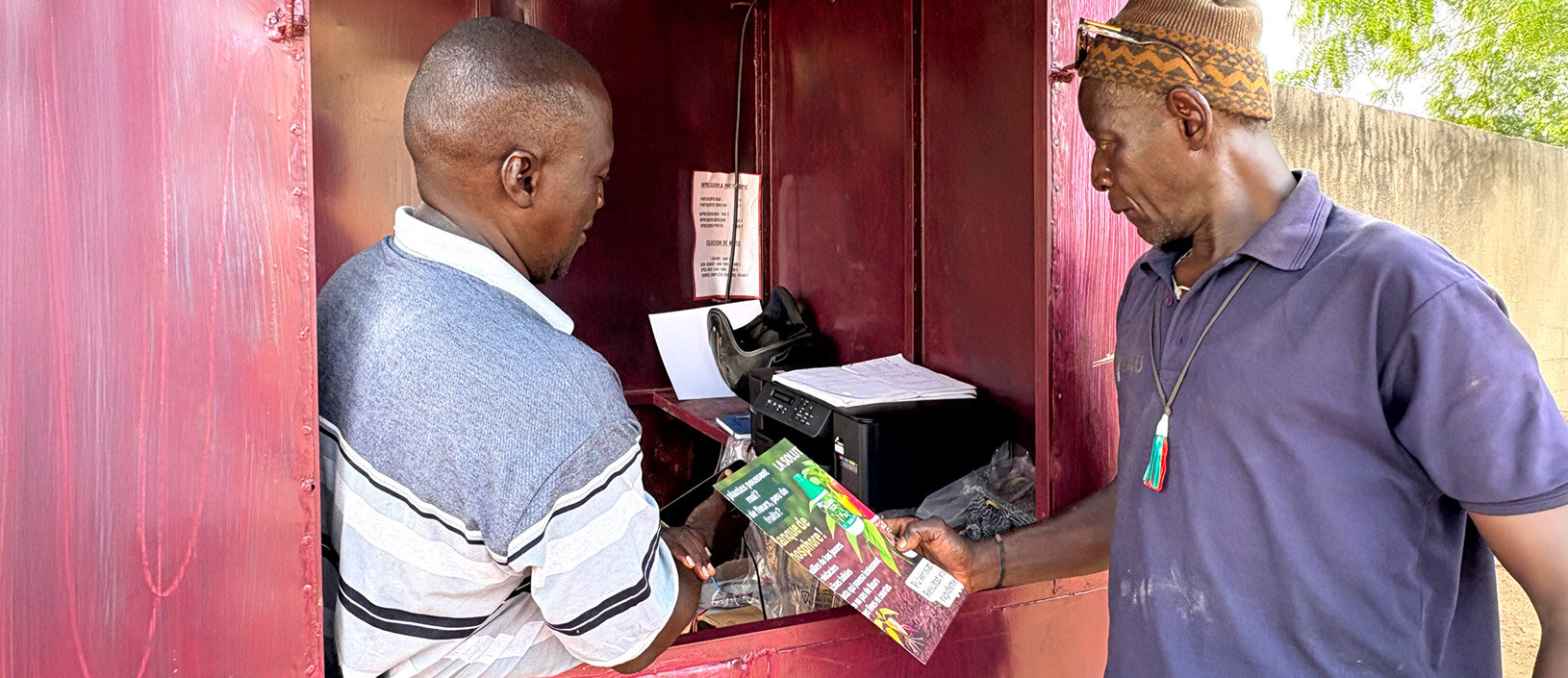
Even in off-grid areas without access to electricity, there is demand for printing. In rural Africa, people have traditionally had to travel long distances to urban centers to access printing services for official documents or educational materials used in schools. Through a collaboration with Dots for Inc., Brother has launched the Village Printing Service, an initiative that contributes to industrial development and improved living standards in off-grid rural communities.
Related SDGs
Dots for: Solving constraints in rural Africa through connectivity and digital technology
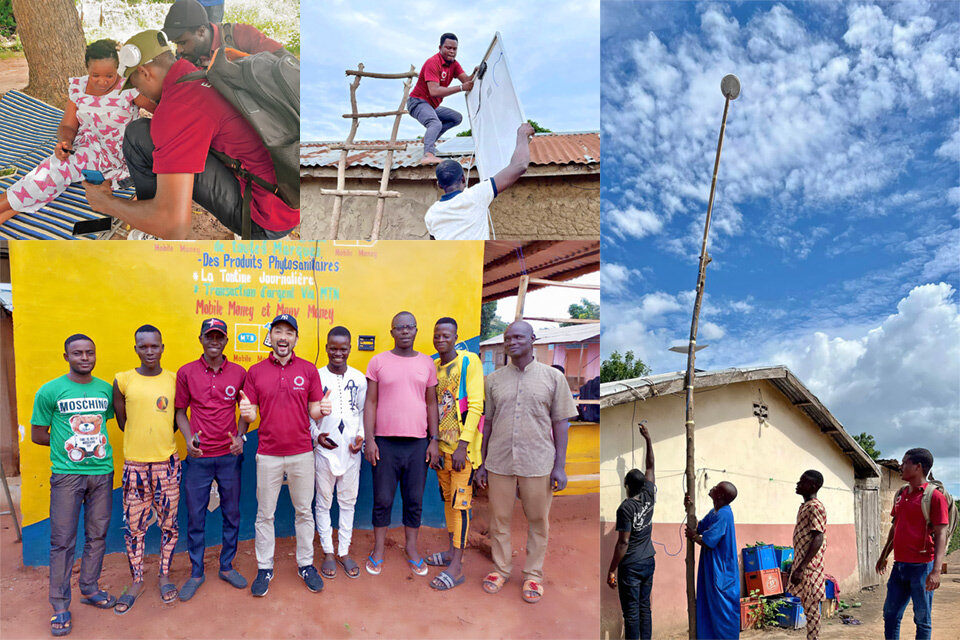
Dots for is a Japan-based startup working to eliminate constraints faced by rural communities in Africa. Believing that connectivity and digital technology can provide rural residents with economic power and the skills to transform their lives, the company aims to bridge the digital divide affecting regions left behind by digitalization. To this end, Dots for has installed communications infrastructure in off-grid rural areas of Benin, Senegal, and Zambia, combining solar-powered generation and supply systems with its digital platform d.CONNECT. Alongside this, the company sells smartphones that can access the platform and provides a variety of digital services.
In villages where Dots for communications infrastructure is installed, residents who purchase a smartphone can earn income by taking on online jobs via the d.CONNECT app, while also charging their devices at low cost. They can access learning video content for vocational training and purchase items ranging from agricultural tools and equipment to motorcycles, machinery, and even livestock such as cattle through installment payment plans. This enables residents to start a wide range of businesses without leaving their villages. In this way, d.CONNECT has transformed life in the villages.
The challenge of printing in rural Africa

Printing is one of the constraints in rural villages that Dots for was determined to eliminate. In African countries, printed materials are indispensable in various situations, including public administrative procedures and the commerce and education fields, and a substantial market for printing exists. However, in rural areas without electricity, there are no local facilities for printing or copying. As a result, residents must travel dozens of kilometers to urban areas, spending far more time and money on transportation than on the actual copying or printing costs. School-related printing demand is particularly high, and in some cases students who are unable to obtain printed or copied materials are put at a disadvantage, even to the point of being unable to participate in classes. While challenges related to infrastructure such as water and electricity in rural Africa are widely recognized and addressed by many organizations, the lack of printing services has largely been overlooked. Determined to eliminate this disadvantage, which leads to lost opportunities in business and education, Dots for approached Brother International (Gulf), which provides Brother printers and All-in-One machines in Africa.
Brother printers operating in rural African villages
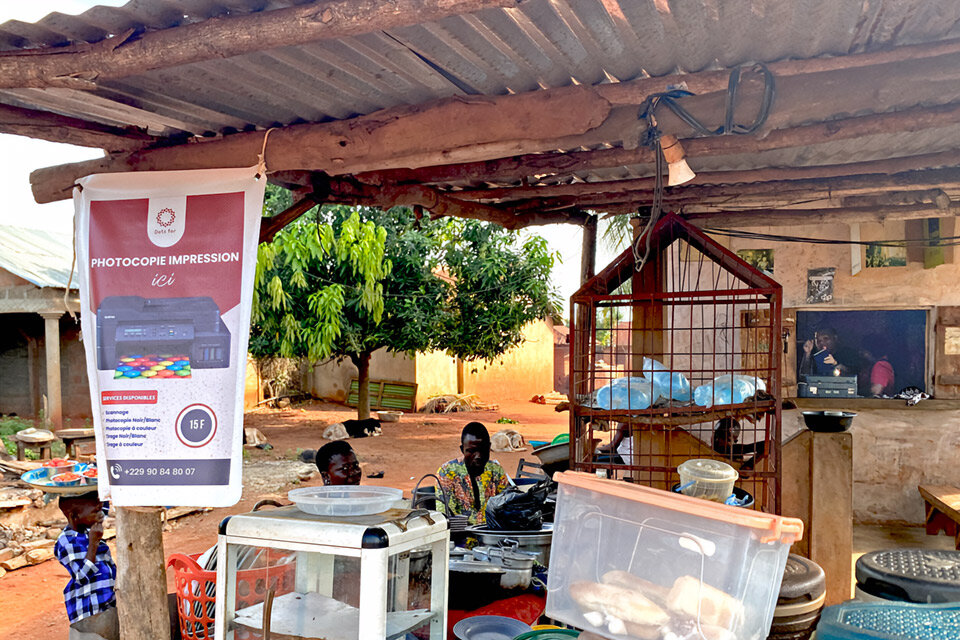
Rural Africa is characterized by hot and humid conditions, and at times extreme heat and dryness. During the day, windows of homes are often left open, and on windy days sand blows inside. These conditions are harsh for precision equipment such as All-in-One printers, and printing services must also consider installation in even more demanding outdoor stall environments. Brother had already developed an inkjet
multi-function printer designed for emerging markets, where the development team overcame various challenges and implemented measures against heat and dust in environments so severe that the black housings could turn white from sand while exposed to high temperatures. From 2024, Brother International (Gulf) brought these devices to rural Benin and conducted test marketing together with Dots for. Teachers, students, and residents needing documents for administrative procedures came in succession to use printing and copying services, confirming strong demand and the viability of the business. In response, Brother and Dots for accelerated development to enable printing services via d.CONNECT, while also viewing this initiative as a foothold for business expansion in Africa and a contribution to a sustainable society. Brother entered into a capital and business alliance agreement with Dots for and made an equity investment.
Industries created by sustainable printing services and the potential of Africa
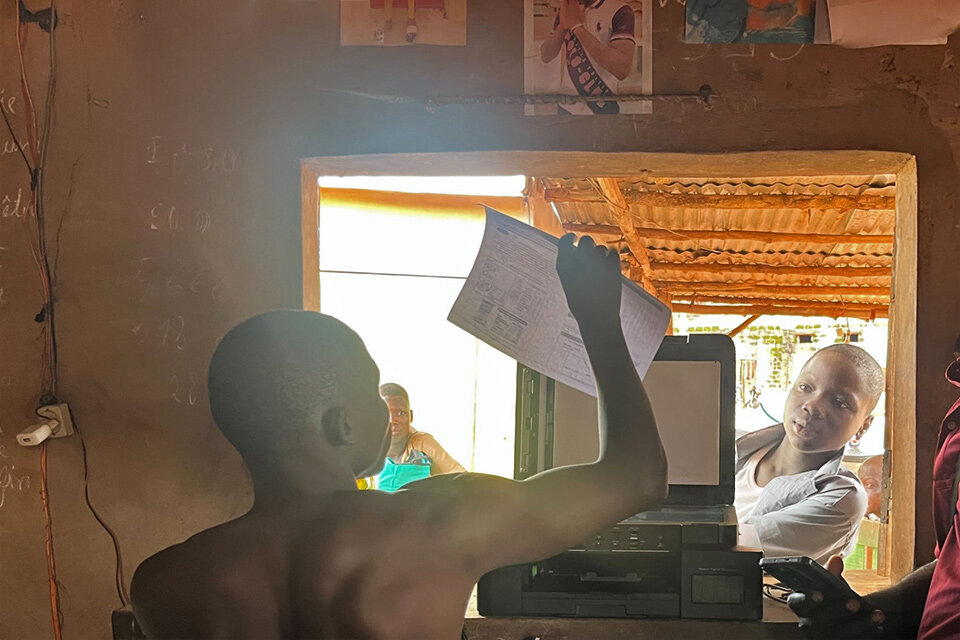
The test marketing phase focused not only on demand, but also on verifying business profitability. By establishing the service as a sustainable business rather than a one-off form of assistance for developing countries, it becomes possible to create new industries and employment in rural areas. With a sustainable business model established by the two companies, the Village Printing Service using Brother inkjet multi-function printers officially launched in Benin in October 2025.
Previously, printing in rural areas was an activity that required traveling to town. The cost and time involved often forced people to forgo printing even when it was necessary. Now, printing is available within the village. One local junior high school-aged girl commented that she was happy that what used to require about an hour-long trip to town for copying could now be done in the village at roughly the same price. With an average age of just 19, Africa is a young continent, and this initiative is also one that expands the future possibilities of its youth.
Through its collaboration with Dots for on the printing service, Brother contributes through its business to the creation of new value in Africa and the achievement of the Sustainable Development Goals, while expanding the potential and future of rural African communities.
Related link
Dots for Inc.
https://dotsfor.com/en
(Links to the Dots for Inc. website.)
SDG Goal 11, Sustainable Cities and Communities, includes a target to ensure access for all to adequate, safe and affordable housing and basic services (11.1). Through the Village Printing Service implemented in collaboration with Dots for, Brother supports daily life in off-grid rural African communities by providing essential printing and copying services for public administrative procedures and education, thereby contributing to the expansion of a sustainable society.
Share this article on social media

Learn about this initiative's SDGs
In ”SDGs at a Glance,” the 17 goals of the SDGs are explained in easy-to-understand illustrations. Click on the goal you are interested in, and you can read about it in under a minute. Let's take a look at the SDG goals featured in this article.
Related Topics