







Better your earth.
Changing Actions to Change the Future
Reducing marine plastic waste through the efforts of Brother Industries (Philippines)
The Philippines is an archipelagic nation in the Pacific Ocean made up of 7,641 islands of all sizes. Located at the heart of the Coral Triangle, also known as the Amazon of the Seas, it is one of the countries with the greatest marine biodiversity in the world. Looking at coral reef ecosystems alone, more than 500 species of coral and around 2,400 species of marine fish live here, making it a habitat for local species such as whale sharks and sea turtles. For people, the sea is not only a platform for industries such as tourism and fisheries, but also a means of transportation, a place to play, and something closely connected to daily life.
However, in the Philippines, marine plastic waste (hereafter, marine waste) has become a serious social issue. Large amounts of plastic consumed domestically are flowing into rivers and the ocean without being properly treated. Starting with environmental activities such as beach cleanups, Brother Industries (Philippines) is working to reduce marine waste by encouraging changes in people’s awareness and actions.
Related SDGs
CSR activities at Brother Industries (Philippines)
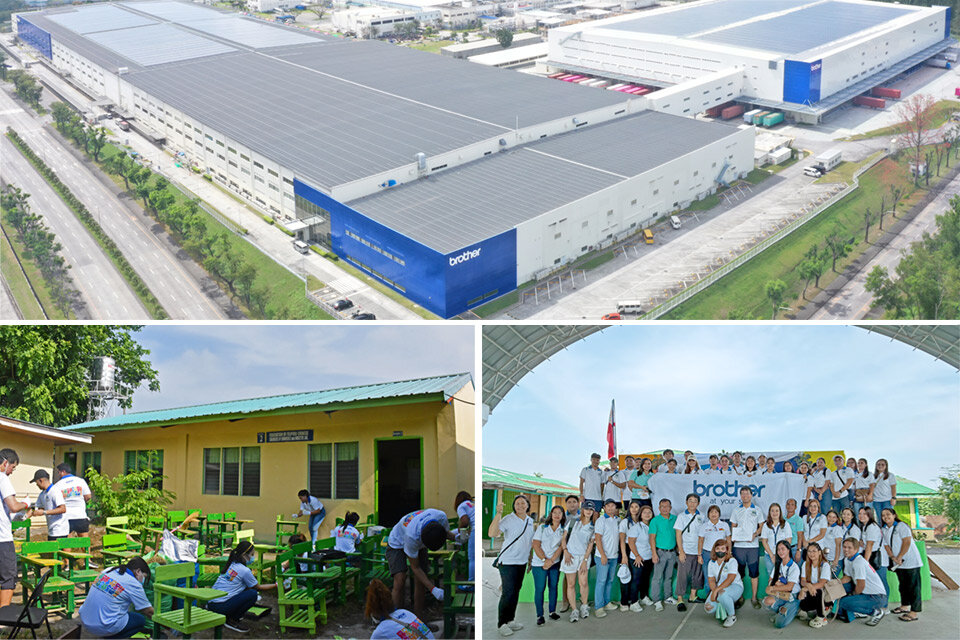
Brother Industries (Philippines) is the Brother Group’s largest manufacturing facility for inkjet multi-function printers, employing more than 10,000 people. Under the vision of “Creating Factory of Happiness that contributes to the progress of all who are involved,” the company not only contributes to society through its production activities, but also provides opportunities for employees to directly contribute to local communities. The company supports local children by participating in Brigada Eskwela (National Schools Maintenance Week) , which prepares public schools before the start of the new school year, including repairing the walls, desks, and chairs of local elementary schools and maintaining their vegetable gardens, as well as by giving presents at Christmas to elementary schools and children in need. It also carries out activities to protect the Philippines’ marine environment, ranging from cleaning up trash along rivers and coastlines to planting mangroves and conserving sea turtles.
Improperly managed plastic waste reaching the ocean
In the Philippines, packaging materials, shopping bags, and plastic bags for takeout have become indispensable in everyday life. In particular, small packets called “sachets,” which allow people to conveniently buy small quantities of groceries and daily necessities, support the livelihoods of many households. As these convenient plastic products spread, plastic waste increased rapidly along with population growth.
With the rapid increase in plastic waste, proper waste management became a challenge. Waste dumped outdoors contaminates waterways and clogs drainage channels, and waste collected without separation slows recycling processes. Since waste incineration was in principle prohibited in 1999 as a measure against air pollution and landfill disposal became mandatory, backlogged waste has piled up at disposal sites and vacant lots across the country, and some of it is washed by wind and rain into rivers and the ocean. Concerns are growing about the impact on ecosystems.
Implementing beach cleanups and mangrove planting together with the sales company
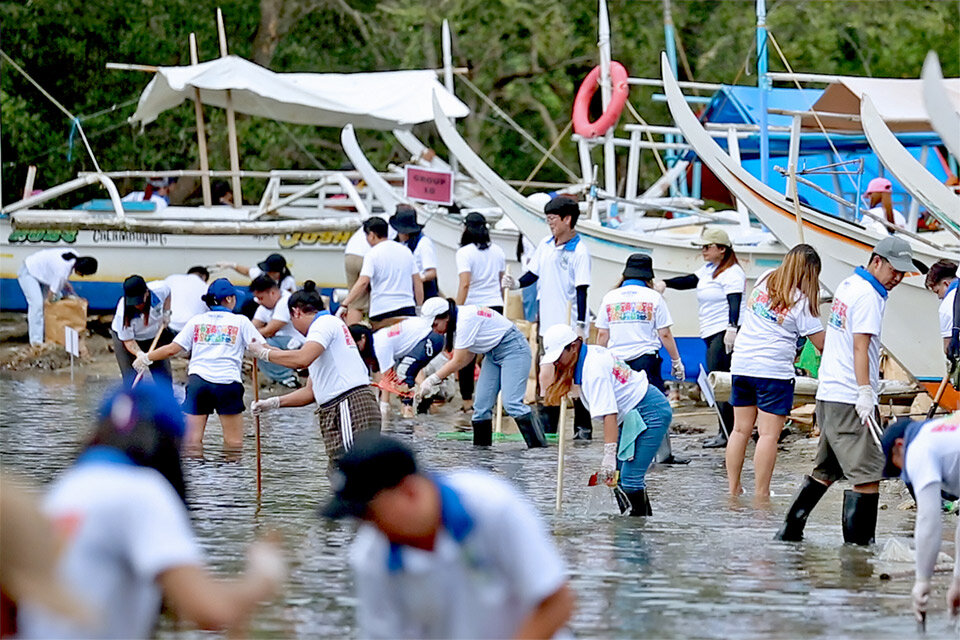
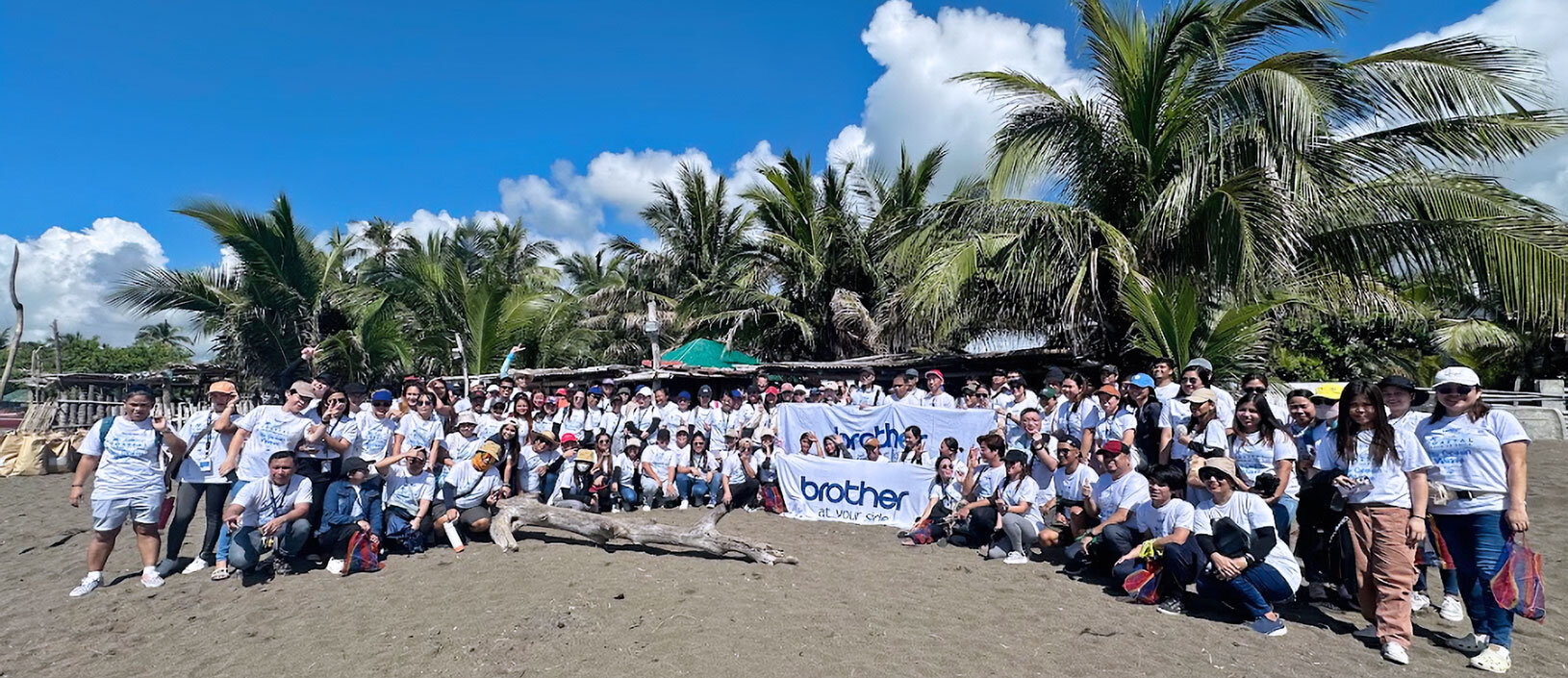
In response to these problems, Brother Industries (Philippines) has worked every year with local governments and residents to conduct beach cleanups at San Juan Beach on World Oceans Day since 2022. Employees of the sales company Brother International Philippines, which is also based in the Philippines, also take part in this activity. Due to the intense heat, the cleanup starts early in the morning. More than 200 employees participate, picking up around 270 sacks of marine waste in approximately two hours.
The Philippines is also known around the world for its abundant mangrove forests. Mangroves are a general term for trees that grow in areas where seawater and freshwater mix. They form “sea forests” that nurture rich ecosystems while also protecting local communities from storm surges and flood damage. However, plastic waste flowing out from land is now threatening these ecosystems as well. Here, too, employees of both companies work together with local communities and the local coast guard. After collecting waste, they plant mangroves, contributing to ecosystem conservation and to strengthening resilience against disasters.
Changing our own actions to change the actions of many
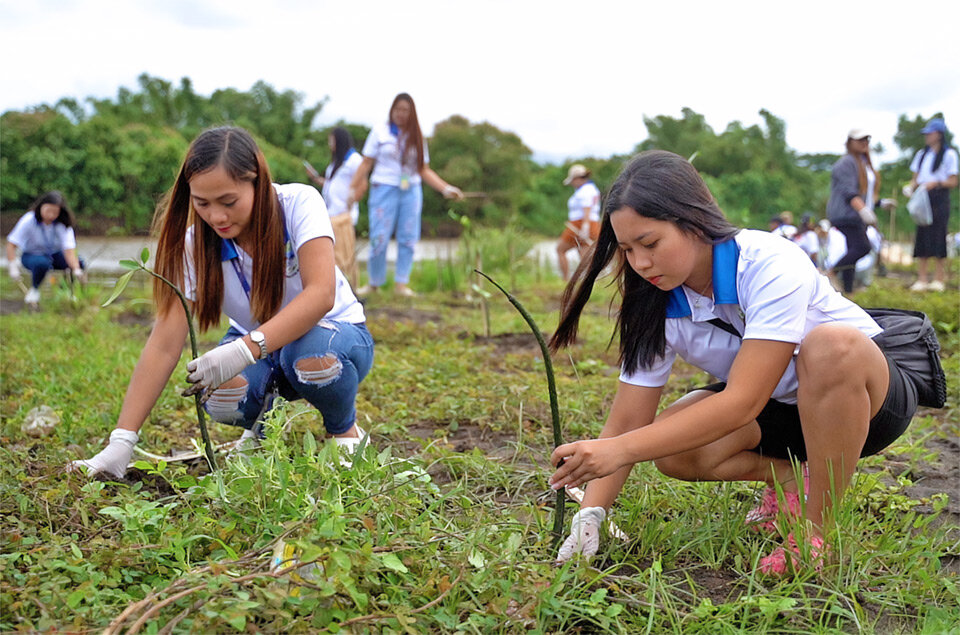
Employee participation in beach cleanups and mangrove planting not only directly contributes to the environment and local communities, but also has another important purpose—to change employees’ awareness and actions. Brother Industries (Philippines) places emphasis on encouraging each employee to understand the realities and impacts of the marine waste issue, think about what they can do, and translate that into everyday actions.
At Brother Industries (Philippines), an annual Action Declaration is conducted to deepen employees’ understanding of the marine waste issue, share what is learned with their families and friends, and broaden activities that help reduce marine waste. If the actions of the more than 10,000 employees who work at the company change, those actions can spread to their families and friends, with the potential to change the actions of 100,000 people.
The knowledge gained through beach cleanups and planting activities becomes a trigger not only for separating waste and avoiding littering, but also for reusing items and changing daily choices such as how air conditioners, toilets, and paper are used.
When each individual takes an interest in the marine waste issue, the small choices that arise can change workplace culture, transform actions throughout local communities, and shape what becomes common sense for the next generation. Through this chain of actions that begins here, the aim is to pass on rich ecosystems, clean seas, and a bright future to the next generation. Brother Industries (Philippines) will continue to take on this challenge.
Preserving our Blue Oceans for Future Generations
SDG Goal 14, “Life Below Water ,” includes a target (14.1) to conserve marine biodiversity and “prevent and significantly reduce marine pollution of all kinds.” SDG Goal 11, “Sustainable Cities and Communities ,” includes a target (11.6) to “reduce the adverse per capita environmental impact of cities, including by paying special attention to air quality and municipal and other waste management .” Brother Industries (Philippines) works to directly reduce marine waste through employee-led cleanup activities along rivers and coastlines, and also aims to use these activities and the Action Declaration as catalysts to expand changes in awareness and actions to those around them. By stopping littering and thoroughly practicing waste separation and reuse, and by sharing these familiar efforts with families and friends to encourage changes in actions, the company seeks to address the root causes of the marine waste issue and contribute to a sustainable future for the Philippines.
Share this article on social media

Learn about this initiative's SDGs
In ”SDGs at a Glance,” the 17 goals of the SDGs are explained in easy-to-understand illustrations. Click on the goal you are interested in, and you can read about it in under a minute. Let's take a look at the SDG goals featured in this article.
Related Topics